Kumbh Mela Mythology
Samudra Manthan: Why Did It Happen & How Is It Connected to Kumbh Mela?
Discover the Hindu mythological story of Samudra Manthan, the search for Amrit and the traditional connection between the Amrit Kumbh and Kumbh Mela, including Nashik-Trimbakeshwar.
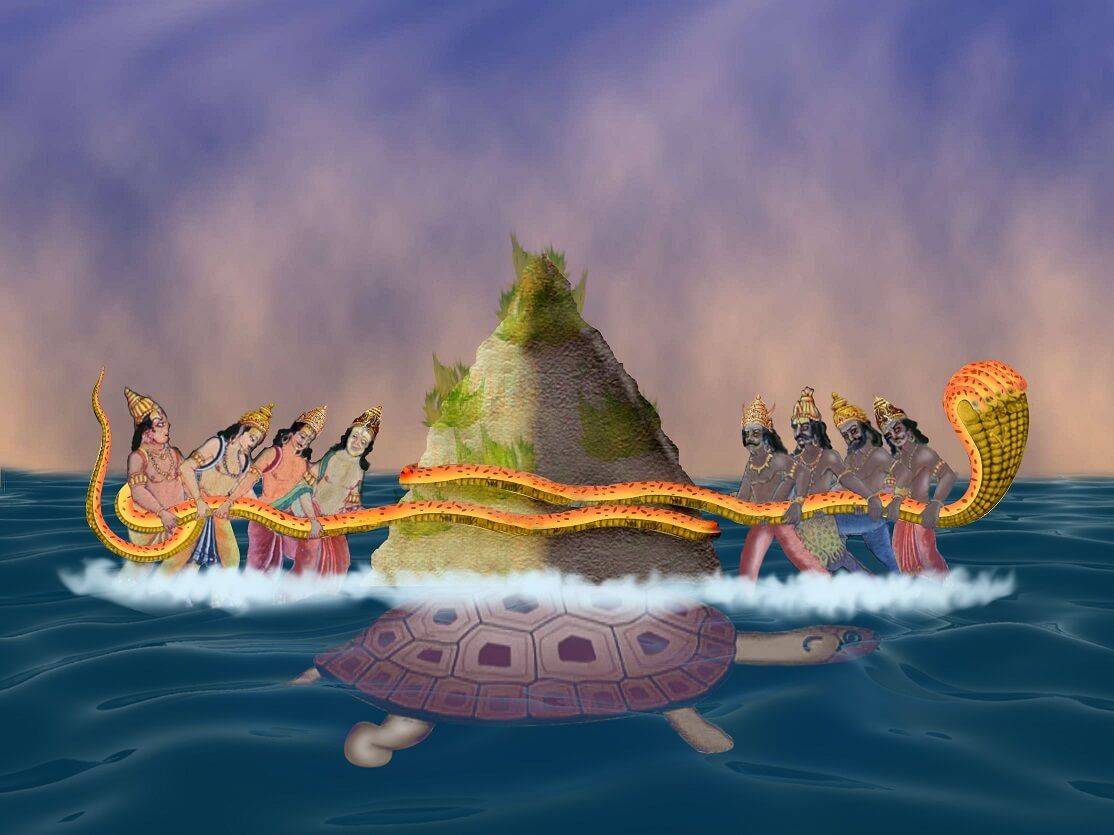
Why Did Samudra Manthan Happen?
According to Hindu mythology, Samudra Manthan happened because the Devas sought Amrit, the nectar of immortality, after losing their strength. Lord Vishnu advised the Devas to work with the Asuras and churn the cosmic ocean to obtain the nectar and other divine treasures.
The story is traditionally regarded as an important mythological foundation of the Kumbh Mela. The Amrit Kumbh, or pitcher containing the nectar, became central to the traditional explanation of why Kumbh is associated with four sacred locations, including Nashik-Trimbakeshwar.
What Is Samudra Manthan?
Samudra Manthan, also known as the Churning of the Ocean, is a major story in Hindu mythology. It describes the Devas and Asuras working together to churn the cosmic ocean in search of Amrit and other extraordinary treasures.
The story describes a struggle between opposing forces, the emergence of divine treasures and the eventual appearance of Dhanvantari carrying the Amrit Kumbh.
Why Did the Devas and Asuras Perform Samudra Manthan?
According to the traditional story, the Devas had become weakened after a curse associated with Sage Durvasa. Seeking to restore their strength, they approached Lord Vishnu for guidance.
Vishnu advised them to churn the ocean of milk and obtain Amrit. Because the task was extremely difficult, the Devas made an agreement with the Asuras to participate in the churning.
In simple terms:
The main purpose of Samudra Manthan was to obtain Amrit, the nectar of immortality, along with other divine treasures that emerged during the churning.
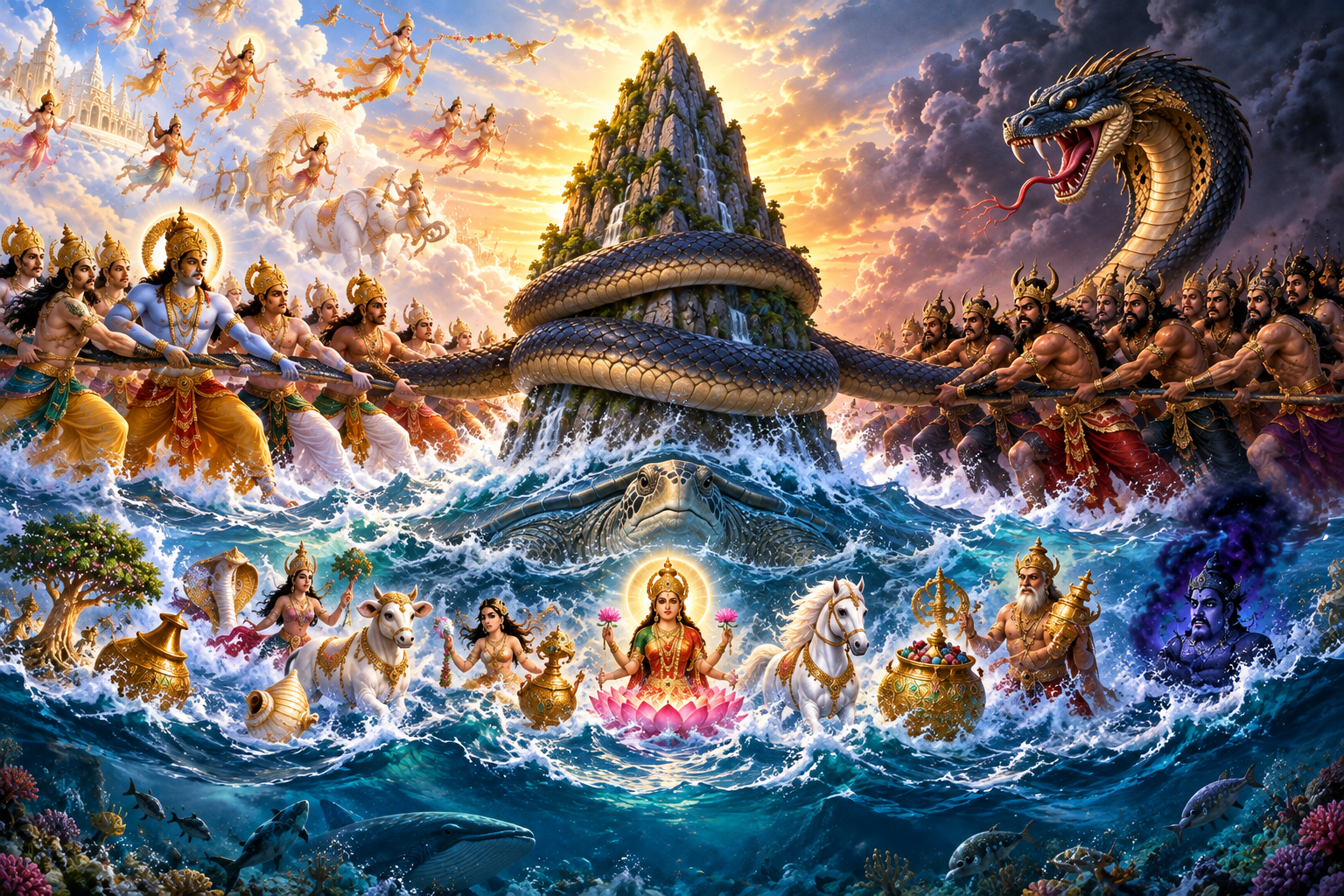
How Was the Cosmic Ocean Churned?
The mythological account describes a carefully arranged process involving a mountain, a divine serpent and the intervention of Lord Vishnu.
Mount Mandara
Used as the churning rod.
Vasuki
Used as the serpent rope around the mountain.
Lord Vishnu
Traditionally described as taking the Kurma, or tortoise, form to support the mountain.
The Devas and Asuras pulled Vasuki from opposite sides, causing Mount Mandara to rotate and churn the cosmic ocean. Hindu tradition describes several divine objects and beings emerging during this process.
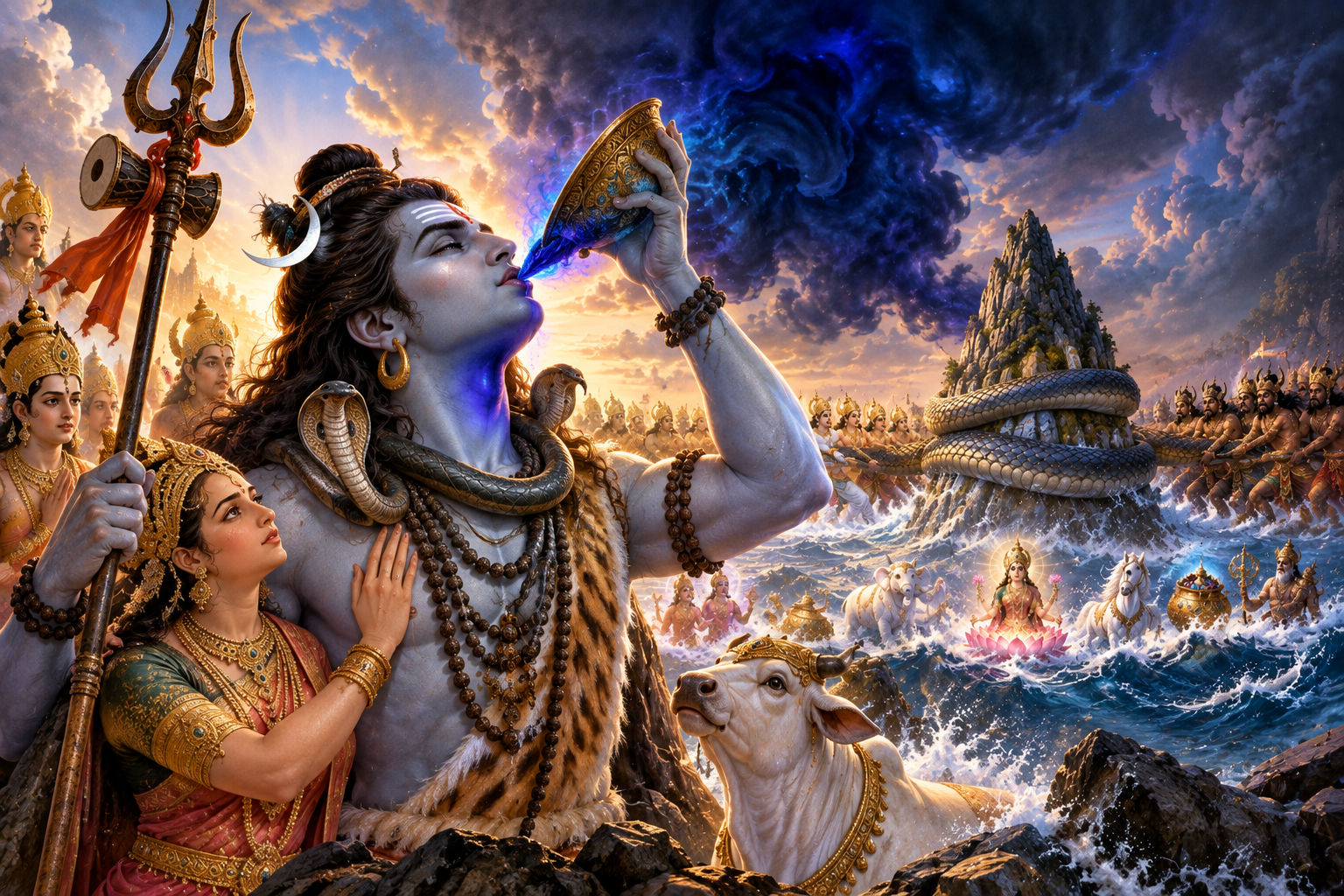
Halahala Poison and Lord Shiva
One of the major dangers described in the Samudra Manthan story was the deadly poison known as Halahala.
According to Hindu mythology, the poison threatened the worlds. Lord Shiva consumed it to protect creation, and the story associates the blue colour of his throat with this act.
What Came Out of Samudra Manthan?
Hindu traditions describe numerous divine treasures and beings emerging from the cosmic ocean. The exact lists can vary between textual traditions.
- Goddess Lakshmi
- Dhanvantari
- Amrit
- Halahala poison
- The Moon
- Other divine treasures
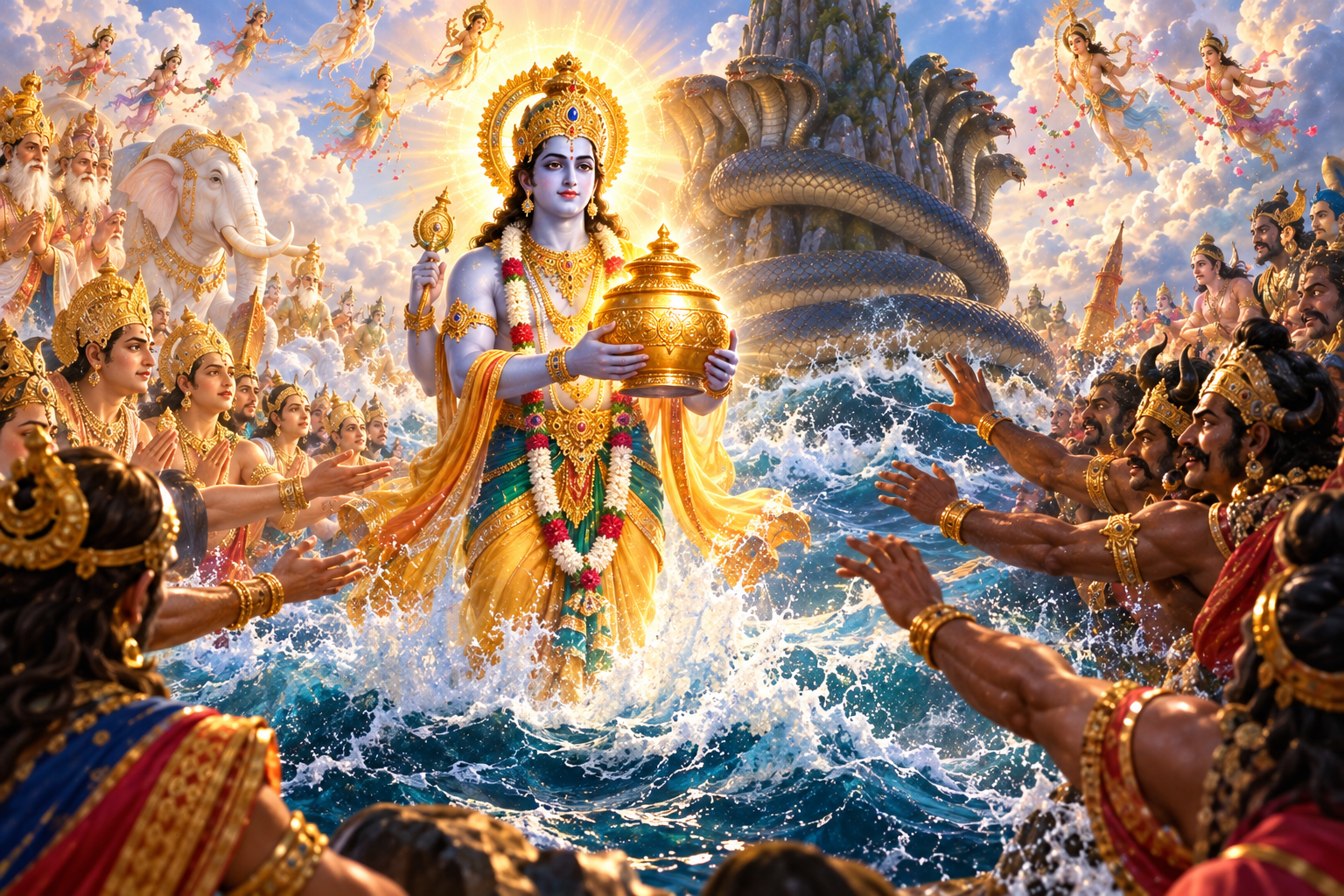
Dhanvantari and the Amrit Kumbh
The most important moment for the later Kumbh tradition occurs when Dhanvantari emerges carrying a Kumbh, or pitcher, containing Amrit.
The nectar becomes the focus of a struggle between the Devas and Asuras. The traditional Kumbh Mela story connects this struggle over the Amrit Kumbh with the sacred geography of the four Kumbh locations.
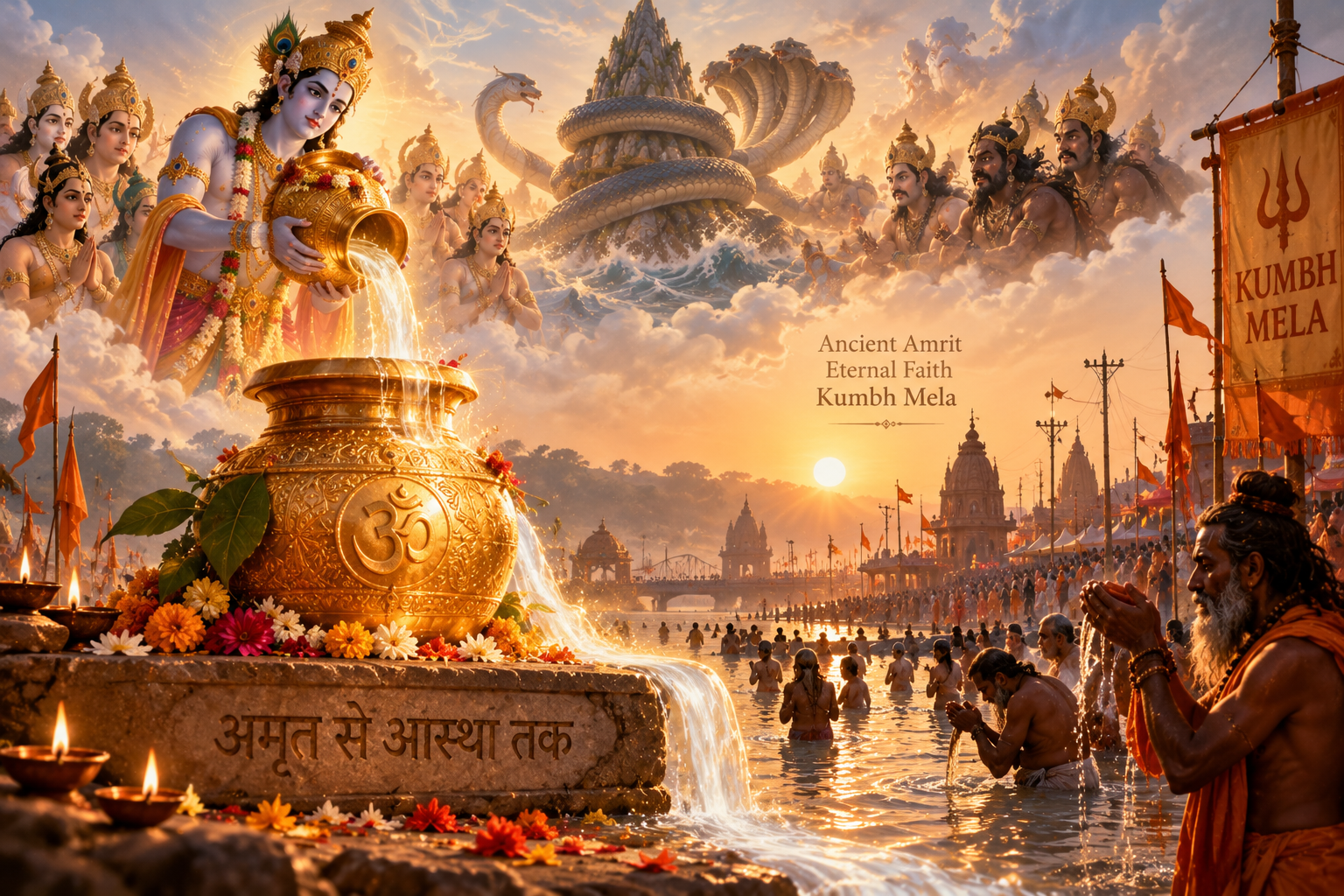
How Is Samudra Manthan Connected to Kumbh Mela?
According to Hindu tradition, during the struggle over the Amrit Kumbh, drops of the nectar are associated with four sacred places: Prayagraj, Haridwar, Nashik-Trimbakeshwar and Ujjain.
This mythology forms an important part of the traditional explanation of the origin of Kumbh Mela.
For Nashik, the tradition is closely associated with the Godavari River and the sacred pilgrimage sites of Nashik and Trimbakeshwar.
The Four Traditional Kumbh Mela Locations
Prayagraj
One of the four traditional Kumbh Mela locations.
Haridwar
One of the four traditional Kumbh Mela locations associated with the Ganga.
Nashik-Trimbakeshwar
Associated with the Godavari and the Simhastha Kumbh tradition.
Ujjain
Associated with the Shipra River and Simhastha tradition.
Why Is Nashik Important in the Kumbh Mela Tradition?
Nashik and Trimbakeshwar form one of the four traditional Kumbh locations. The Nashik-Trimbakeshwar event is commonly known as Simhastha Kumbh.
The sacred Godavari, Ramkund, Trimbakeshwar and other pilgrimage sites contribute to Nashik's religious importance during Kumbh Mela.
The upcoming Nashik Kumbh Mela 2027 is being planned and coordinated by the Nashik-Trimbakeshwar Kumbh Mela Authority.
Explore Nashik Kumbh 2027 Development Plan →Explore Kumbh Mela
What Is Kumbh Mela?
Understand the meaning, tradition and significance of Kumbh Mela.
Shahi Snan & Amrit Snan
Learn about the important bathing traditions associated with Kumbh Mela.
Significance of Godavari River
Explore why the Godavari is central to Nashik's pilgrimage tradition.
Nashik Kumbh Mela 2027 Dates
Check the latest information about the Nashik-Trimbakeshwar Kumbh schedule.
Akharas in Kumbh Mela
Learn about Akharas and their role during Kumbh Mela.
Nashik Kumbh Mela 2027 Budget
Explore the approved development plan and major projects.
Spiritual Significance of Samudra Manthan
Beyond the narrative of the Devas, Asuras and Amrit, Samudra Manthan is interpreted within Hindu thought as a story involving struggle, transformation and the emergence of both danger and divine treasures.
Its connection with Kumbh Mela gives the pilgrimage a deeper mythological context. The Kumbh tradition brings together sacred bathing, religious discourse, ascetic traditions and pilgrimage at specific sacred locations.
Frequently Asked Questions
Why did Samudra Manthan happen?
According to Hindu mythology, the Devas sought Amrit, the nectar of immortality, after losing their strength. They worked with the Asuras to churn the cosmic ocean and obtain it.
What is Samudra Manthan?
Samudra Manthan is the Hindu mythological account of the churning of the cosmic ocean by the Devas and Asuras to obtain Amrit and other divine treasures.
What is the connection between Samudra Manthan and Kumbh Mela?
Hindu tradition connects the Amrit Kumbh from the Samudra Manthan story with four sacred locations traditionally associated with Kumbh Mela: Prayagraj, Haridwar, Nashik-Trimbakeshwar and Ujjain.
Why is Nashik associated with Kumbh Mela?
Nashik-Trimbakeshwar is one of the four traditional Kumbh locations and is closely associated with the sacred Godavari River and the Simhastha tradition.
What is the Amrit Kumbh?
Amrit Kumbh means the pitcher containing Amrit, the nectar of immortality, in the Samudra Manthan story.
Is Samudra Manthan the historical origin of Kumbh Mela?
Samudra Manthan is the traditional mythological explanation associated with Kumbh Mela. It should be understood as part of Hindu religious tradition rather than presented as a verified historical event.
Information Note
This article presents Samudra Manthan and the traditional origin story of Kumbh Mela from the perspective of Hindu mythology and religious traditions. Details of mythological narratives can vary across Hindu texts and traditions. Contemporary information about Nashik Kumbh Mela 2027 is presented separately using government and other public sources.
Planning for Nashik Kumbh Mela 2027?
Explore dates, pilgrimage places, temples, ghats, travel information and the latest development updates for Nashik-Trimbakeshwar Simhastha Kumbh Mela 2027.