Sacred Tirtha Guide
Kushavarta Kund Trimbakeshwar Guide for Nashik Kumbh Mela 2027
Kushavarta Kund is one of the most sacred pilgrimage sites in Trimbakeshwar and holds immense religious significance for devotees visiting Nashik Kumbh Mela 2027. Located near the revered Trimbakeshwar Jyotirlinga Temple, the kund is closely associated with the origin of the Godavari River and centuries-old Hindu pilgrimage traditions.
For countless devotees, a visit to Trimbakeshwar is incomplete without offering prayers at Kushavarta Kund. According to Hindu religious traditions, this sacred water tank is regarded as the symbolic point where the Godavari River begins its visible journey after emerging from the Brahmagiri Hills. Because of this association, Kushavarta Kund has become one of the most important ritual and bathing sites in Maharashtra.
During Nashik–Trimbakeshwar Kumbh Mela, millions of pilgrims, saints, and spiritual seekers gather around this sacred tirtha to participate in religious ceremonies, holy bathing rituals, and traditional pilgrimage activities. Its importance extends far beyond a simple water reservoir; it represents faith, devotion, spiritual purification, and the deep cultural heritage of Trimbakeshwar.
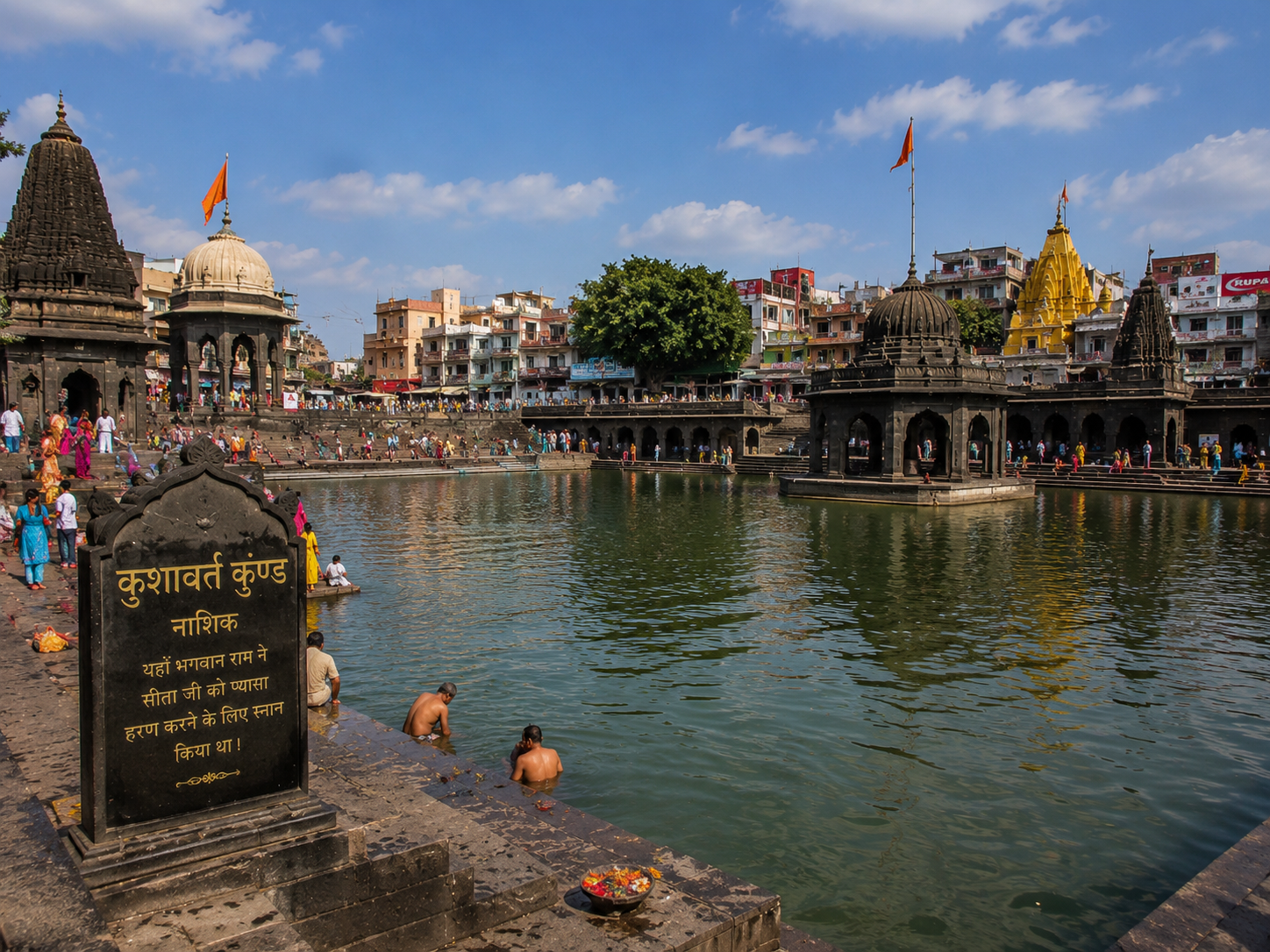
What is Kushavarta Kund?
Kushavarta Kund, also known as Kushavarta Tirtha, is a sacred kund located in the heart of Trimbakeshwar town near the famous Trimbakeshwar Temple. It is one of the most important pilgrimage locations associated with the Godavari River and serves as a central spiritual landmark for devotees visiting the region.
The kund is regarded as the symbolic source of the Godavari River, which is often referred to as the “Ganga of the South.” According to local traditions and religious beliefs, pilgrims traditionally take a holy dip in Kushavarta Kund before proceeding to the Trimbakeshwar Jyotirlinga for darshan and worship.
Surrounded by temples, shrines, and centuries-old religious structures, Kushavarta Kund forms an integral part of the spiritual landscape of Trimbakeshwar. It is visited throughout the year by devotees, but its significance becomes even greater during major Hindu festivals and Kumbh Mela celebrations.
Historical Background of Kushavarta Kund
Kushavarta Kund has been associated with pilgrimage traditions for centuries. Historical records and local references indicate that the present structure underwent major development during the Maratha period. The kund became an important center for ritual bathing and religious activities due to its connection with the Godavari River and Trimbakeshwar Temple.
Architectural features around the kund reflect traditional temple design commonly found in Maharashtra. Various shrines and religious structures surrounding the kund highlight its long-standing importance in Hindu pilgrimage culture.
Today, Kushavarta Kund remains one of the most visited sacred locations in Trimbakeshwar and continues to attract pilgrims from across India who seek spiritual connection, ritual purification, and participation in traditional religious ceremonies.
The Legend of Sage Gautama and the Godavari River
According to Hindu religious traditions, Kushavarta Kund is deeply connected with the story of Sage Gautama. Ancient legends describe Gautama Rishi as a wise and devoted sage who lived in the region surrounding present-day Trimbakeshwar.
Traditional accounts state that Gautama Rishi performed intense penance and worship of Lord Shiva. Pleased by his devotion, Lord Shiva granted his prayers and allowed the sacred river Ganga to manifest in this region in the form of the Godavari River.
Religious traditions further explain that the Godavari emerged from the Brahmagiri Hills and became associated with Kushavarta Kund, making the site one of the holiest pilgrimage destinations in western India.
While these stories are rooted in religious belief and spiritual tradition, they continue to play a significant role in shaping the cultural and devotional importance of Kushavarta Kund among pilgrims and devotees.
Connection Between Kushavarta Kund and the Godavari River
One of the primary reasons for the importance of Kushavarta Kund is its association with the Godavari River. The Godavari is the second-longest river in India and is regarded as one of the holiest rivers in Hinduism.
Pilgrims visiting Trimbakeshwar often begin their spiritual journey by paying respects at Kushavarta Kund because it is considered the symbolic point where the sacred waters become accessible for ritual bathing and worship.
The connection between the Godavari River and Kushavarta Kund has transformed the site into a major religious center that attracts devotees throughout the year and especially during Nashik Kumbh Mela.
Why Kushavarta Kund is Considered Sacred
- • Sacred association with the Godavari River.
- • Important connection with Trimbakeshwar Jyotirlinga.
- • Traditional site for ritual bathing and prayers.
- • Historical significance in Hindu pilgrimage culture.
- • Major role during Nashik–Trimbakeshwar Kumbh Mela.
- • Spiritual importance for devotees of Lord Shiva.
Kushavarta Kund During Nashik Kumbh Mela 2027
Why Kushavarta Kund is Important During Nashik Kumbh Mela
The significance of Kushavarta Kund increases enormously during Nashik–Trimbakeshwar Kumbh Mela. While many visitors associate Kumbh Mela primarily with Ramkund in Nashik city, Trimbakeshwar and Kushavarta Kund play an equally important role in the spiritual geography of the festival.
According to long-standing religious traditions, saints, ascetics, akhadas, and pilgrims gather in the Trimbakeshwar region to participate in sacred bathing rituals, prayers, religious discourses, and ceremonial processions. The presence of the Trimbakeshwar Jyotirlinga combined with the sacred association of Kushavarta Kund creates a unique pilgrimage environment during the Kumbh festival.
For many devotees, visiting Kushavarta Kund during Kumbh Mela represents an opportunity to connect with centuries of spiritual traditions that continue to attract pilgrims from across India and around the world.
During Nashik Kumbh Mela 2027, Kushavarta Kund is expected to become one of the most significant ritual locations in the entire pilgrimage region. The kund serves as a focal point for sacred bathing traditions and religious ceremonies performed by devotees, saints, and akhadas.
Kumbh Mela is one of the largest religious gatherings in the world, and Trimbakeshwar plays a vital role in the festival due to its connection with Lord Shiva and the Godavari River. As a result, Kushavarta Kund receives extraordinary attention from pilgrims seeking spiritual experiences during the festival period.
Religious processions, ceremonial bathing events, and traditional spiritual activities often center around the sacred geography of Trimbakeshwar, making Kushavarta Kund a must-visit destination for many pilgrims attending the Kumbh Mela.
Rituals and Religious Ceremonies at Kushavarta Kund
Kushavarta Kund is not only a sacred bathing site but also an important center for various Hindu religious rituals. Pilgrims visiting Trimbakeshwar often participate in ceremonies that are traditionally associated with purification, remembrance of ancestors, and spiritual well-being.
Various rites such as Shraddha ceremonies, Pitru-related rituals, and other traditional religious observances are commonly performed in the Trimbakeshwar region. Many devotees believe that performing these ceremonies in a sacred environment connected with the Godavari River and Trimbakeshwar Jyotirlinga holds special spiritual significance.
Visitors are advised to consult authorized priests or temple authorities for guidance regarding rituals and religious procedures during their pilgrimage.
Architecture and Layout of Kushavarta Kund
The architectural design of Kushavarta Kund reflects the religious heritage of Trimbakeshwar. Historical descriptions mention that the kund features a distinctive layout surrounded by temples, shrines, and sacred structures that contribute to its spiritual atmosphere.
Traditional references describe Kushavarta Kund as having a six-sided design, which has contributed to its religious importance over centuries. Several temples dedicated to different deities can be found around the kund, creating a complete pilgrimage experience for visitors.
The combination of sacred water, temple architecture, and historical significance makes Kushavarta Kund one of the most recognizable religious landmarks in Trimbakeshwar.
Best Time to Visit Kushavarta Kund
- • Early mornings are ideal for a peaceful spiritual experience.
- • Shravan month is considered especially significant for Shiva devotees.
- • Mahashivratri attracts large numbers of pilgrims.
- • Nashik Kumbh Mela is the most spiritually vibrant period.
- • Winter months generally provide comfortable weather for travel.
How to Reach Kushavarta Kund
Kushavarta Kund is located in Trimbakeshwar town, approximately 28 to 30 kilometers from Nashik city. The site is well connected through road networks and can be reached using public transportation, private taxis, and personal vehicles.
By Road
Regular buses, taxis, and private vehicles operate between Nashik and Trimbakeshwar throughout the year.
By Railway
Nashik Road Railway Station is the nearest major railway station and is well connected with major Indian cities.
By Air
Nashik Airport and Mumbai Airport provide air connectivity for pilgrims traveling from different regions.
Suggested Pilgrimage Route for First-Time Visitors
- 1. Arrive at Trimbakeshwar.
- 2. Visit Kushavarta Kund and offer prayers.
- 3. Proceed to Trimbakeshwar Jyotirlinga Temple.
- 4. Explore Brahmagiri Hills and nearby sacred sites.
- 5. Travel to Nashik city.
- 6. Visit Ramkund and Panchavati.
- 7. Explore important ghats along the Godavari River.
Nearby Places to Visit
Trimbakeshwar Temple
One of the twelve Jyotirlingas and among the most important Shiva temples in India.
Brahmagiri Hills
Sacred hills associated with the origin traditions of the Godavari River and a popular pilgrimage destination.
Ramkund
One of the most important ghats in Nashik and a major location during Nashik Kumbh Mela.
Kushavarta Kund and Ramkund: Understanding the Difference
Many first-time visitors to Nashik Kumbh Mela are confused about the difference between Kushavarta Kund and Ramkund. Both are sacred pilgrimage sites associated with the Godavari River, but they serve different religious and geographical roles.
Kushavarta Kund is located in Trimbakeshwar and is traditionally associated with the symbolic emergence of the Godavari River. Ramkund, on the other hand, is located in Nashik city and is one of the most important ritual bathing ghats along the river.
Pilgrims visiting Nashik Kumbh Mela often include both locations in their spiritual itinerary because each site has its own unique historical, religious, and cultural significance.
Travel Tips for Pilgrims Visiting Kushavarta Kund
- • Visit early in the morning to avoid crowds.
- • Respect local customs and temple regulations.
- • Carry drinking water and essential medicines.
- • Keep footwear and belongings secure during crowded periods.
- • Book accommodation early during Kumbh Mela and major festivals.
- • Follow official advisories issued by local authorities.
Sacred Temples Around Kushavarta Kund
One of the most fascinating aspects of Kushavarta Kund is the collection of smaller temples and shrines surrounding the sacred water reservoir. These structures contribute to the spiritual atmosphere of the area and form part of the traditional pilgrimage circuit followed by many devotees.
Historical references mention shrines dedicated to Lord Shiva, Lord Ganesha, and other Hindu deities around the kund. Pilgrims often visit these temples while performing parikrama and other devotional activities.
The combination of sacred water, temple architecture, and religious symbolism creates an environment that reflects the rich spiritual heritage of Trimbakeshwar and the broader Nashik region.
Related Nashik Kumbh Mela Guides
Continue Exploring Nashik Kumbh Mela
Frequently Asked Questions
Why is Kushavarta Kund famous?
Kushavarta Kund is famous for its connection with the Godavari River, Trimbakeshwar Temple, and its role as a sacred pilgrimage and ritual bathing site.
Is Kushavarta Kund important during Kumbh Mela?
Yes. Kushavarta Kund is one of the most important religious locations during Nashik–Trimbakeshwar Kumbh Mela and attracts large numbers of pilgrims.
Can visitors take a holy dip in Kushavarta Kund?
Pilgrims traditionally visit the kund for ritual bathing, though visitors should always follow current local regulations and guidance from authorities.
How far is Kushavarta Kund from Nashik city?
Kushavarta Kund is located approximately 28–30 kilometers from Nashik city and is easily accessible by road.
Sources and References
This guide has been prepared using publicly available pilgrimage, tourism, and cultural references related to Kushavarta Kund, Trimbakeshwar, and Nashik Kumbh Mela.
- • Nashik District Administration Tourism Information
- • Trimbakeshwar pilgrimage references
- • Maharashtra tourism resources
- • Cultural and historical references related to the Godavari River
Kushavarta Kund remains one of the most spiritually significant destinations in Trimbakeshwar and continues to attract pilgrims from across India. Its association with the Godavari River, Trimbakeshwar Jyotirlinga, and Nashik Kumbh Mela makes it an essential destination for devotees seeking to explore the spiritual heritage of Maharashtra.