Temple Guide
Kapaleshwar Temple Nashik Guide for Kumbh Mela 2027
Kapaleshwar Temple is one of the most unique and spiritually significant Shiva temples in Nashik. Situated in the sacred Panchavati area near Ramkund and the Godavari River, the temple attracts thousands of devotees every year and becomes especially important during Nashik Kumbh Mela. What makes Kapaleshwar Temple truly extraordinary is that it is widely believed to be the only Shiva temple where Nandi, Lord Shiva’s sacred bull, is not positioned in front of the Shivling.
Located in the heart of Panchavati, Kapaleshwar Mahadev Mandir forms an essential part of the religious circuit followed by pilgrims visiting Nashik. Devotees often combine their visit to Kapaleshwar Temple with darshan at Ramkund, Panchavati, Kalaram Temple, and other sacred destinations associated with the spiritual heritage of Nashik.
During Nashik Kumbh Mela 2027, the temple is expected to witness a large influx of pilgrims seeking blessings from Lord Shiva and exploring one of the most fascinating legends in Hindu temple traditions. This guide covers the history, mythology, significance, darshan information, and travel tips for Kapaleshwar Temple.
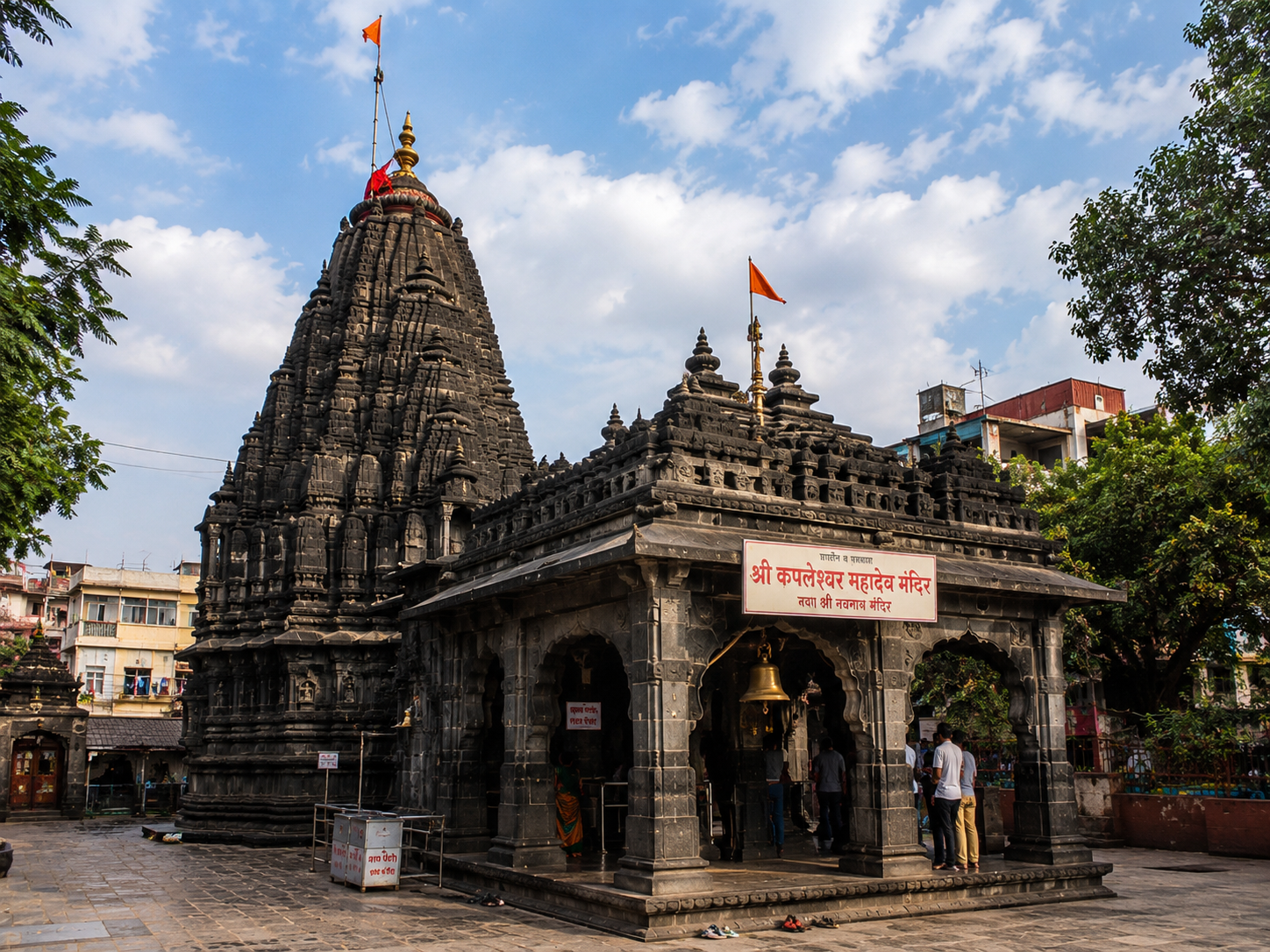
Quick Facts About Kapaleshwar Temple
- 📍 Location: Panchavati, Nashik, Maharashtra .
- 🕉️ Main Deity: Lord Shiva
- ⭐ Famous For: Temple without Nandi
- 🌊 Nearby Sacred Site: Ramkund
- 🎉 Major Festival: Mahashivratri
- 🚩 Kumbh Importance: Important Panchavati pilgrimage destination
What is Kapaleshwar Temple??
Kapaleshwar Temple is an ancient Shiva temple located near Ramkund in Panchavati, one of the holiest regions of Nashik. The temple has long been a center of worship, meditation, and pilgrimage for devotees of Lord Shiva.
Unlike most Shiva temples across India, Kapaleshwar Temple does not have a Nandi statue facing the Shivling. This distinctive feature has made the temple famous among devotees, historians, and travelers interested in Hindu temple traditions.
The temple's location near the sacred Godavari River and Ramkund further enhances its spiritual importance. Pilgrims often visit Kapaleshwar Temple after performing rituals at Ramkund and before continuing their journey through Panchavati.
Meaning of the Name Kapaleshwar
The name "Kapaleshwar" is derived from two Sanskrit words: "Kapala," meaning skull or head, and "Ishwar," meaning Lord. Together, the name can be interpreted as "Lord of the Skull."
This name is closely associated with a famous legend involving Lord Shiva and Lord Brahma. According to religious traditions, Lord Shiva removed the fifth head of Lord Brahma, an event that later became connected with the mythology of Kapaleshwar Temple.
The temple's name serves as a reminder of themes such as humility, repentance, wisdom, and spiritual purification, which continue to attract devotees seeking deeper spiritual understanding.
History of Kapaleshwar Temple
Kapaleshwar Temple is considered one of the oldest and most respected Shiva temples in Nashik. Located in the historic Panchavati region, the temple has been part of Nashik’s religious landscape for centuries and continues to attract pilgrims from across India.
Historical references suggest that the temple has undergone preservation and renovation over different periods while retaining its spiritual significance. The temple's association with Ramkund, the Godavari River, and Panchavati has helped maintain its importance as a pilgrimage destination.
Over time, Kapaleshwar Temple became known not only for its connection with Lord Shiva but also for its unique traditions that distinguish it from almost every other Shiva temple in the country.
The Legend of Kapaleshwar Temple According to Hindu Traditions
According to traditions associated with the Padma Purana and local religious beliefs, Lord Shiva once incurred the sin known as Brahma Hatya after removing the fifth head of Lord Brahma. Seeking redemption and purification, Shiva wandered across the universe in search of a place where he could perform penance.
The legend states that Shiva eventually arrived in Panchavati near the Godavari River. It was here that events unfolded which would later establish the spiritual significance of Kapaleshwar Temple and create one of the most unique traditions in Hindu temple culture.
These traditions continue to be passed down through generations and remain an important part of the temple’s spiritual identity.
Why is Nandi Absent in Kapaleshwar Temple?
The absence of Nandi is the most distinctive feature of Kapaleshwar Temple and the primary reason many visitors are drawn to this sacred site. In almost every Shiva temple, Nandi sits directly facing the Shivling and serves as Lord Shiva’s divine vehicle and devoted attendant.
However, Kapaleshwar Temple follows a different tradition. According to local religious beliefs, Nandi played an important role in guiding Lord Shiva toward purification and spiritual wisdom. As a result, Nandi came to be revered as a guru rather than merely a vehicle.
Out of respect for this role, no Nandi statue was placed in front of the Shivling. This tradition continues to this day and makes Kapaleshwar Temple one of the most unique Shiva temples in India.
Nandi as Guru: The Unique Spiritual Tradition
One of the most fascinating aspects of Kapaleshwar Temple is the belief that Nandi was not merely the vehicle of Lord Shiva but also acted as a spiritual guide. According to local traditions, Nandi demonstrated the path to purification and redemption, helping Lord Shiva overcome the burden associated with Brahma Hatya.
Because of this belief, devotees consider Nandi to have attained the status of a guru. In Hindu tradition, a guru is highly revered, and the absence of Nandi before the Shivling symbolizes this elevated spiritual position.
This tradition makes Kapaleshwar Temple a unique pilgrimage destination and attracts visitors interested in learning about rare temple customs that are not commonly found elsewhere in India.
Kapaleshwar Temple and Ramkund Connection
Kapaleshwar Temple is located just a short distance from Ramkund, one of the most sacred ghats along the Godavari River. Because of this proximity, pilgrims often include both locations in the same spiritual journey.
Ramkund is known for religious rituals, ancestral ceremonies, and its importance during Nashik Kumbh Mela. After offering prayers at Ramkund, many devotees proceed to Kapaleshwar Temple to seek blessings from Lord Shiva.
Together, Ramkund and Kapaleshwar Temple form an important part of the sacred Panchavati pilgrimage circuit and represent centuries of religious tradition in Nashik.
Importance of Kapaleshwar Temple During Nashik Kumbh Mela 2027
During Nashik Kumbh Mela, millions of pilgrims visit Nashik and Trimbakeshwar to participate in one of the world's largest religious gatherings. While Ramkund and Trimbakeshwar are among the most visited locations, Kapaleshwar Temple remains an important spiritual destination for Shiva devotees.
The temple's location in Panchavati makes it easily accessible to pilgrims visiting Ramkund, Kalaram Temple, and other sacred sites. Many devotees include Kapaleshwar Temple in their Kumbh pilgrimage itinerary because of its unique traditions and deep association with Lord Shiva.
Visiting Kapaleshwar Temple during Kumbh Mela offers pilgrims an opportunity to experience a quieter and more contemplative spiritual atmosphere while remaining connected to the larger festival celebrations.
Temple Architecture
Kapaleshwar Temple reflects traditional temple architecture commonly seen in historic religious sites across Maharashtra. The temple's stone construction, sacred sanctum, and elevated position contribute to its spiritual ambiance.
The simplicity of the structure allows devotees to focus on worship and meditation. Unlike many elaborate temple complexes, Kapaleshwar Temple is appreciated for its peaceful environment and timeless spiritual character.
Its location overlooking the sacred region of Panchavati further enhances the religious experience for visitors.
Daily Rituals and Worship
Daily worship at Kapaleshwar Temple includes traditional Shiva rituals, prayers, and aarti ceremonies. Devotees visit throughout the day to offer flowers, water, milk, and prayers to Lord Shiva.
The temple remains especially active during Mondays, Shravan month, and major Shiva festivals when large numbers of devotees gather for worship.
Major Festivals Celebrated at Kapaleshwar Temple
- 🕉️ Mahashivratri – The most important festival celebrated at the temple.
- 🌙 Shravan Month – Special significance for Shiva devotees.
- 🙏 Mondays Dedicated to Lord Shiva.
- 🚩 Kumbh Mela Celebrations and Pilgrim Visits.
Darshan Timings and Entry Information
- 🕒 Morning: 5:00 AM – 12:00 PM
- 🕒 Evening: 4:00 PM – 9:00 PM
- 🎟️ Entry Fee: Free
- 🚗 Parking: Available nearby
How to Reach Kapaleshwar Temple
By Road
Easily accessible from all parts of Nashik through local buses, taxis, and private vehicles.
By Train
Nashik Road Railway Station is approximately 8 km from the temple.
By Air
Nashik Airport (Ozar) is the nearest airport serving pilgrims and visitors.
Nearby Attractions
Suggested Panchavati Pilgrimage Route
- 1. Start at Ramkund.
- 2. Visit Kapaleshwar Temple.
- 3. Explore Panchavati.
- 4. Visit Kalaram Temple.
- 5. Continue to other sacred ghats along the Godavari River.
Frequently Asked Questions
Why is Kapaleshwar Temple famous?
Kapaleshwar Temple is famous because Nandi is not positioned before the Shivling, making it one of the most unique Shiva temples in India.
Where is Kapaleshwar Temple located?
The temple is located in Panchavati, Nashik, near Ramkund and the Godavari River.
Is there an entry fee?
No, entry to Kapaleshwar Temple is free for all devotees.
Sources and References
- • Official Kapaleshwar Mahadev Mandir Website
- • Nashik Religious and Tourism References
- • Panchavati Cultural and Historical Sources
- • Pilgrimage and Temple Information Resources