Kumbh Mela Guide
Akharas in Kumbh Mela Guide: History, Naga Sadhus and Nashik Kumbh Mela 2027
Akharas are among the most important institutions of Hindu spiritual tradition and play a central role in every Kumbh Mela. During Nashik Kumbh Mela 2027, millions of pilgrims will witness the grand processions, spiritual practices, and sacred bathing rituals led by Akharas and their saints. These centuries-old organizations preserve religious teachings, ascetic traditions, and the cultural heritage of Sanatan Dharma.
Whether you are planning to attend the Nashik Kumbh Mela, interested in the traditions of Naga Sadhus, or simply want to understand the significance of Akharas, this guide provides a detailed overview of their history, purpose, role in Shahi Snan and Amrit Snan, and importance within the Kumbh Mela ecosystem.
Akharas are not merely religious groups. They are living institutions that have protected spiritual knowledge, trained ascetics, preserved traditions, and guided devotees for centuries. Their presence at the Kumbh Mela represents the unity, diversity, and continuity of Hindu spiritual culture.
Quick Facts About Akharas
- 🕉️ Purpose: Spiritual training, ascetic discipline and preservation of Hindu traditions
- 🚩 Major Role: Leading Shahi Snan and Amrit Snan processions
- 👣 Participants: Saints, Mahants, Mahamandaleshwars and Naga Sadhus
- 🌊 Kumbh Connection: Central institutions of every Kumbh Mela
- 📖 Heritage: Linked with centuries-old Hindu monastic traditions
- ⭐ Importance: Spiritual leadership and preservation of Sanatan Dharma
What Are Akharas?
An Akhara is a traditional Hindu monastic institution where ascetics, saints, and spiritual seekers undergo religious training, spiritual discipline, meditation, and philosophical study. Historically, Akharas also maintained martial traditions and played an important role in protecting Hindu religious institutions and pilgrimage routes.
The term "Akhara" is often associated with a training ground or organized religious order. Over time, Akharas evolved into highly respected spiritual institutions that preserve ancient teachings while continuing to guide millions of devotees.
Today, Akharas remain an essential part of the Kumbh Mela and are among the most recognizable symbols of Hindu spiritual life. Their participation in sacred rituals, especially Shahi Snan and Amrit Snan, attracts global attention during every Kumbh Mela.
History of Akharas
The origins of Akharas can be traced back many centuries. Various Hindu monastic traditions established organized groups of ascetics to preserve spiritual teachings, maintain religious discipline, and safeguard sacred institutions. Over time, these groups developed structured systems of leadership, training, and religious practice.
Several Akharas are associated with the Dashanami tradition linked to Adi Shankaracharya, while others developed through distinct spiritual lineages and philosophical schools. Despite differences in practices and traditions, all Akharas contribute to preserving the rich spiritual heritage of Hinduism.
Their continued participation in the Kumbh Mela reflects a living connection between ancient traditions and modern religious life, making them an integral part of Nashik Kumbh Mela and other major pilgrimage gatherings.
Why Were Akharas Created?
Akharas were established to create disciplined communities of spiritual practitioners who could preserve religious teachings, guide devotees, and maintain sacred traditions across generations. In earlier periods, some Akharas also helped protect pilgrimage routes and religious centers.
These institutions became centers of learning, meditation, philosophy, yoga, and spiritual discipline. Their organizational structure allowed them to preserve knowledge and continue training future generations of ascetics and religious leaders.
Today, the mission of Akharas continues through spiritual guidance, religious education, cultural preservation, and active participation in major events such as Nashik Kumbh Mela 2027.
Role of Akharas in Kumbh Mela
Akharas are the spiritual backbone of the Kumbh Mela. Their participation transforms the festival from a large pilgrimage gathering into a profound expression of Hindu spiritual traditions. During Nashik Kumbh Mela, Akharas organize religious ceremonies, guide devotees, preserve sacred customs, and lead some of the most important rituals of the event.
The presence of Akharas represents the continuity of centuries-old monastic traditions. Their camps become centers of spiritual learning, meditation, discussion, and religious activities where pilgrims can interact with saints and gain deeper insight into Hindu philosophy.
From Shahi Snan processions to spiritual discourses and cultural activities, Akharas contribute significantly to the religious atmosphere of the Kumbh Mela and help preserve the spiritual identity of this sacred gathering.
Spiritual Leadership Within Akharas
Every Akhara operates under a structured leadership system headed by respected spiritual figures such as Mahants and Mahamandaleshwars. These leaders are responsible for guiding followers, preserving traditions, and ensuring that religious practices continue according to established customs.
During Nashik Kumbh Mela 2027, these spiritual leaders will oversee major rituals, lead processions, conduct religious discourses, and provide guidance to devotees seeking spiritual knowledge and inspiration.
Their leadership helps maintain discipline, organization, and continuity within the Akhara system while strengthening the spiritual experience of pilgrims attending the Kumbh Mela.
Why Are Akharas Important During Shahi Snan and Amrit Snan?
One of the most visible roles of Akharas is their participation in Shahi Snan, also known as Amrit Snan. The ceremonial bathing procession led by Akharas is considered one of the most sacred and anticipated events of the Kumbh Mela.
According to tradition, Akharas are granted priority access to the sacred bathing ghats. Their participation symbolizes the leadership role they hold within the broader Hindu spiritual community and reflects centuries of religious customs associated with the Kumbh Mela.
For many pilgrims, witnessing the Akharas entering the sacred waters of the Godavari River is one of the most memorable experiences of Nashik Kumbh Mela.
Grand Akhara Processions
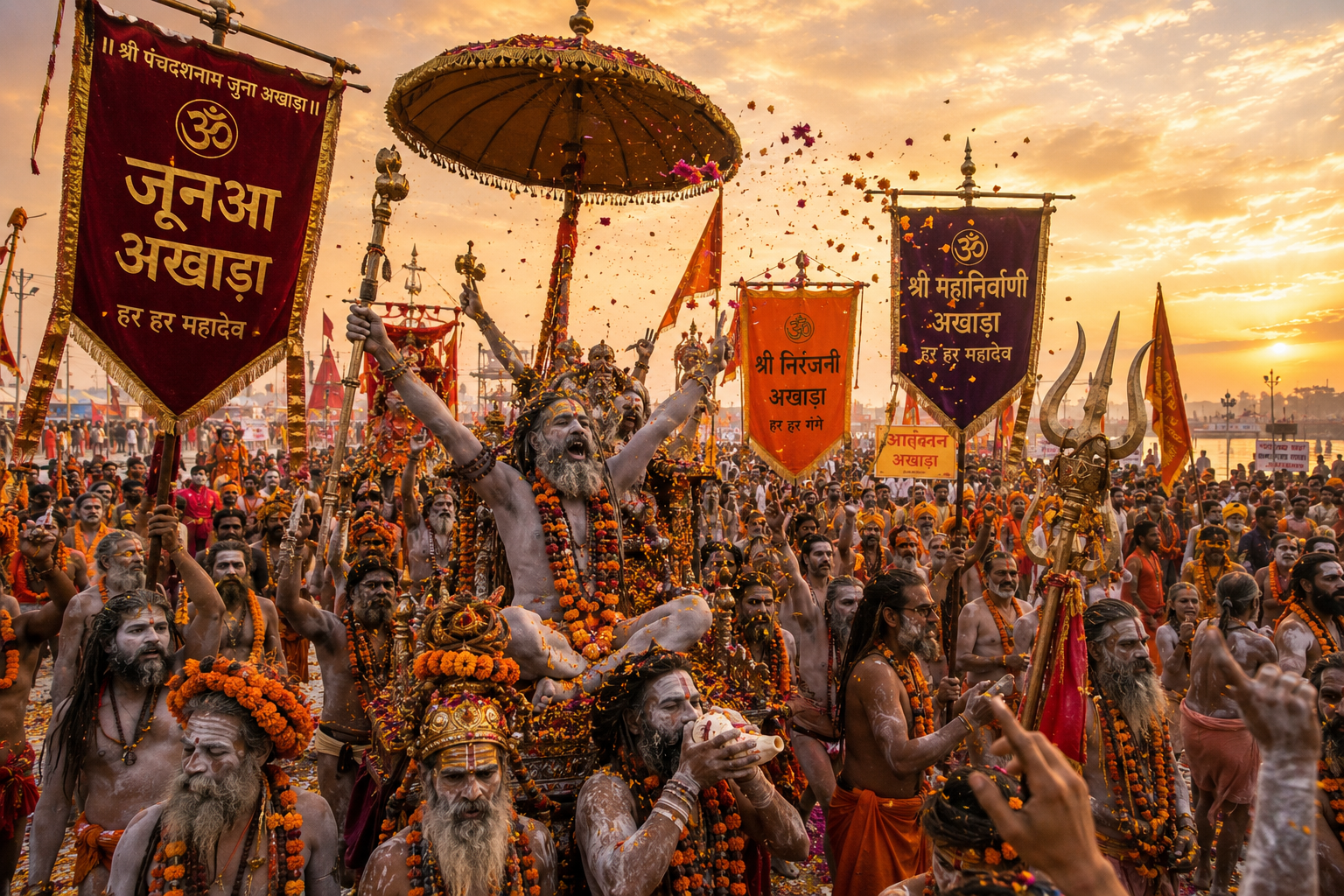
Akhara processions are among the most visually striking aspects of the Kumbh Mela. These ceremonial parades feature saints, Naga Sadhus, spiritual leaders, traditional symbols, religious flags, devotional chanting, and sacred rituals.
As the Akharas proceed toward the bathing ghats, thousands of devotees gather to witness the spectacle. The processions represent both religious devotion and the living continuity of ancient Hindu traditions.
During Nashik Kumbh Mela 2027, these processions are expected to attract pilgrims, photographers, researchers, and visitors from around the world who wish to experience one of Hinduism's most remarkable traditions.
Akhara Camps During Kumbh Mela
Every Akhara establishes a temporary camp during the Kumbh Mela. These camps function as spiritual centers where saints reside, religious discussions take place, and pilgrims can learn about different traditions and philosophies.
Akhara camps often host devotional programs, meditation sessions, scriptural teachings, and spiritual discourses. Many pilgrims visit these camps to seek blessings, ask questions, and gain a deeper understanding of Hindu spiritual practices.
The camps contribute significantly to the educational and cultural dimensions of the Kumbh Mela, transforming the event into a living spiritual university.
Who Are Naga Sadhus?
Naga Sadhus are among the most famous ascetics associated with the Akharas and the Kumbh Mela. Renowned for their intense spiritual discipline and renunciation of worldly attachments, they represent one of the most distinctive traditions within Hindu monastic life.
Many Naga Sadhus belong to Shaiva traditions and dedicate their lives to meditation, austerity, devotion, and spiritual practice. Their appearance, lifestyle, and participation in Kumbh Mela processions have fascinated pilgrims and visitors for generations.
During Shahi Snan and Amrit Snan, Naga Sadhus are often among the first participants to enter the sacred waters, making them one of the most recognizable symbols of the Kumbh Mela.
Naga Sadhus and Nashik Kumbh Mela 2027
During Nashik Kumbh Mela 2027, Naga Sadhus will once again play a prominent role in the ceremonial processions and sacred bathing rituals. Their participation attracts enormous interest from pilgrims who wish to witness these ancient traditions firsthand.
The presence of Naga Sadhus highlights the spiritual depth and historical continuity of the Kumbh Mela. Their commitment to asceticism and devotion serves as an inspiration for many devotees seeking a deeper connection with spiritual life.
For visitors attending Nashik Kumbh Mela, observing the participation of Naga Sadhus is often one of the most unforgettable experiences of the pilgrimage.
Major Akharas of Kumbh Mela
While multiple Akharas participate in the Kumbh Mela, certain Akharas are especially well known because of their historical significance, spiritual influence, and prominent participation in Shahi Snan and Amrit Snan processions.
Juna Akhara
Juna Akhara is one of the oldest and largest Akharas in India. It is associated with the Dashanami tradition and is often considered one of the most influential Akharas participating in the Kumbh Mela. The Akhara emphasizes renunciation, devotion, meditation, and spiritual discipline.
During Kumbh Mela celebrations, Juna Akhara leads some of the most impressive processions and attracts significant attention from pilgrims and visitors.
Niranjani Akhara
Niranjani Akhara is known for its emphasis on spiritual knowledge, meditation, and yogic practices. Followers of this Akhara focus on self-realization, disciplined living, and spiritual growth through contemplation and devotion.
The Akhara actively participates in Kumbh Mela rituals and contributes to the spiritual atmosphere through teachings, religious activities, and ceremonial participation.
Atal Akhara
Atal Akhara is associated with devotion, knowledge, and service. The Akhara promotes spiritual growth while encouraging selfless service and religious dedication. Its traditions reflect a balanced approach to spiritual life and community responsibility.
During the Kumbh Mela, Atal Akhara participates in sacred rituals, processions, and religious activities that strengthen the spiritual character of the gathering.
Agni Akhara
Agni Akhara draws inspiration from the symbolism of fire, representing transformation, purification, and spiritual awakening. The Akhara emphasizes disciplined practice and inner transformation through devotion and spiritual effort.
Its participation in Kumbh Mela ceremonies contributes to the diversity of traditions represented by the Akhara system.
The 13 Akharas and Their Importance
The Kumbh Mela is closely associated with thirteen recognized Akharas that collectively represent a wide range of Hindu monastic traditions. These Akharas preserve spiritual teachings, maintain religious customs, train ascetics, and contribute to the organization and cultural richness of the Kumbh Mela.
Together, the Akharas demonstrate the diversity of Hindu spiritual traditions while maintaining a shared commitment to preserving Sanatan Dharma. Their collective participation in sacred bathing rituals symbolizes unity within diversity and highlights the inclusive nature of the Kumbh Mela.
For pilgrims attending Nashik Kumbh Mela 2027, understanding the role of the Akharas provides valuable insight into one of the most important aspects of the festival.
Akharas During Nashik Kumbh Mela 2027
During Nashik Kumbh Mela 2027, Akharas will once again be at the center of the celebrations. Their camps, processions, spiritual discourses, and participation in Shahi Snan and Amrit Snan will attract millions of pilgrims to Nashik, Panchavati, Ramkund, and Trimbakeshwar.
The Akharas help preserve the sacred atmosphere of the Kumbh Mela while offering opportunities for devotees to learn about Hindu philosophy, spirituality, and traditional religious practices.
Their participation strengthens the connection between the Godavari River, sacred bathing rituals, and the broader spiritual significance of the Nashik Kumbh Mela.
Related Guides
Frequently Asked Questions
What are Akharas in Kumbh Mela?
Akharas are Hindu monastic institutions that preserve spiritual traditions, train ascetics, and play a central role in Kumbh Mela rituals and processions.
Why are Akharas important?
Akharas preserve religious teachings, provide spiritual leadership, organize sacred rituals, and help maintain centuries-old Hindu traditions.
Who are Naga Sadhus?
Naga Sadhus are ascetics associated with Akharas who are known for their renunciation, spiritual discipline, and prominent participation in Kumbh Mela processions and sacred baths.
Which Akhara is the largest?
Juna Akhara is widely regarded as one of the largest and most influential Akharas participating in the Kumbh Mela.
Sources and References
- • Kumbh Mela Akhara Educational Resources
- • Historical References on Hindu Monastic Traditions
- • Kumbh Mela Spiritual and Cultural Documentation
- • Akhara and Naga Sadhu Information Sources